Sanding Sponge Blocks: 8-Piece Washable Set for DIY Projects
Whether you are preparing drywall, smoothing wooden furniture, refining a painted surface, or polishing metal, having the right abrasive material can make the work more controlled and consistent. These Sanding Sponge Blocks provide a practical solution for hand sanding, combining four useful grit levels with a flexible sponge design that works on both flat and irregular surfaces.
The set includes eight sanding blocks in coarse, medium, fine, and superfine grades. With two blocks for each grit, you can move through different stages of a project without needing to purchase several separate sanding products.
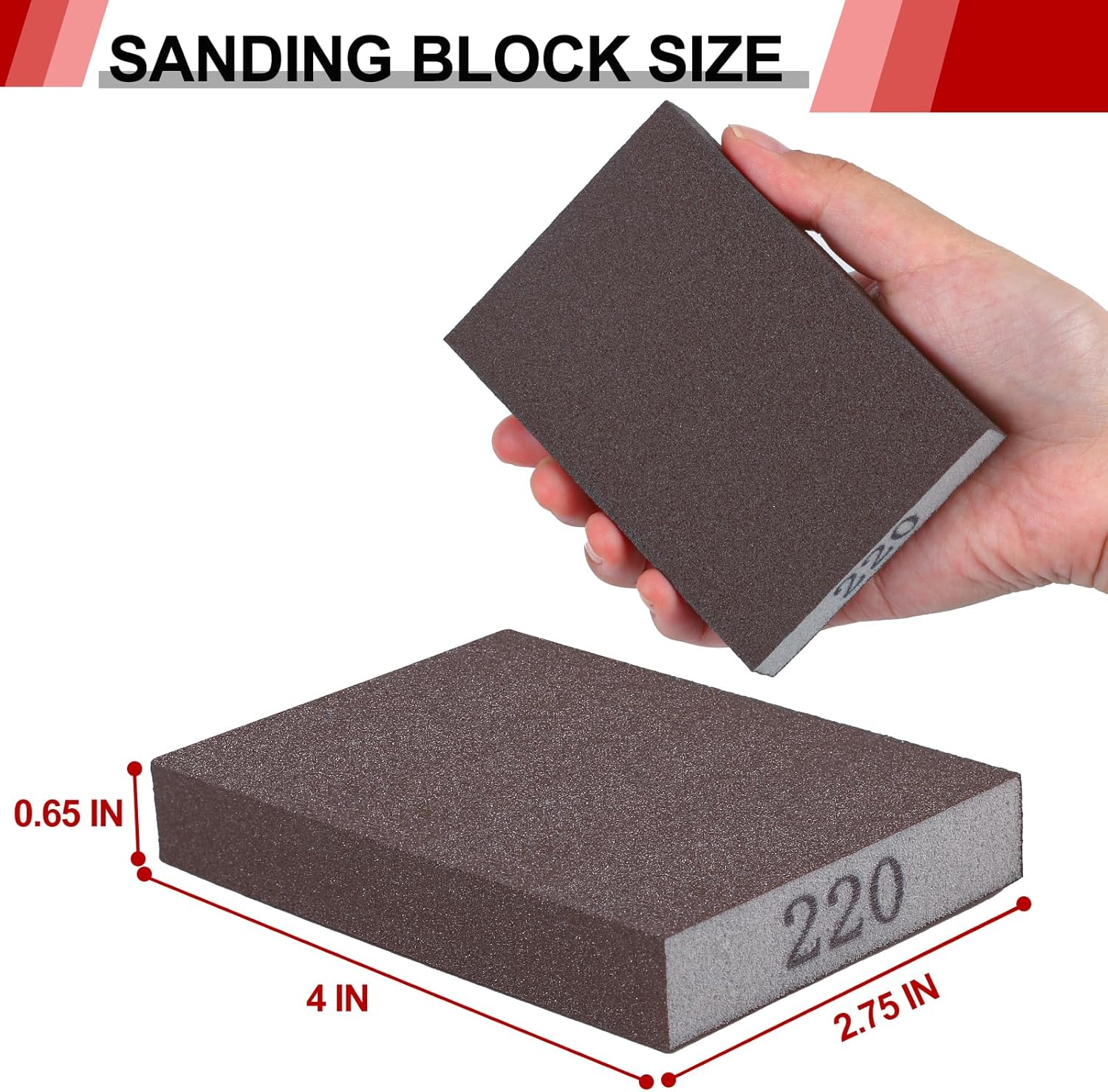
Table of Contents
- Product Overview
- Four Assorted Grit Levels
- Durable Abrasive Materials
- Wet and Dry Sanding
- Easy Grit Identification
- Multi-Purpose Applications
- How to Use Sanding Sponge Blocks
- Final Thoughts
Product Overview
These Sanding Sponge Blocks are designed for users who need a flexible hand-sanding solution for home repairs, furniture refinishing, renovation work, and general workshop tasks. Their compact block shape gives you direct control over the sanding area, which can be especially helpful around corners, edges, curves, and detailed surfaces.
Unlike traditional flat sandpaper sheets, sanding sponges can conform more easily to uneven shapes. This makes them useful for both broad surfaces and areas where a rigid sanding tool may not reach comfortably.

Four Assorted Grit Levels for Flexible Sanding
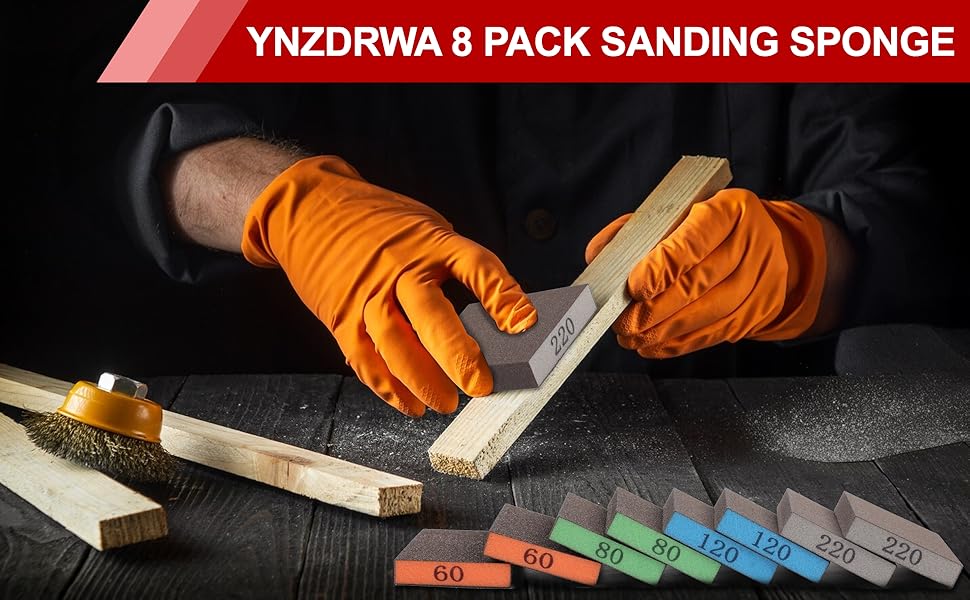
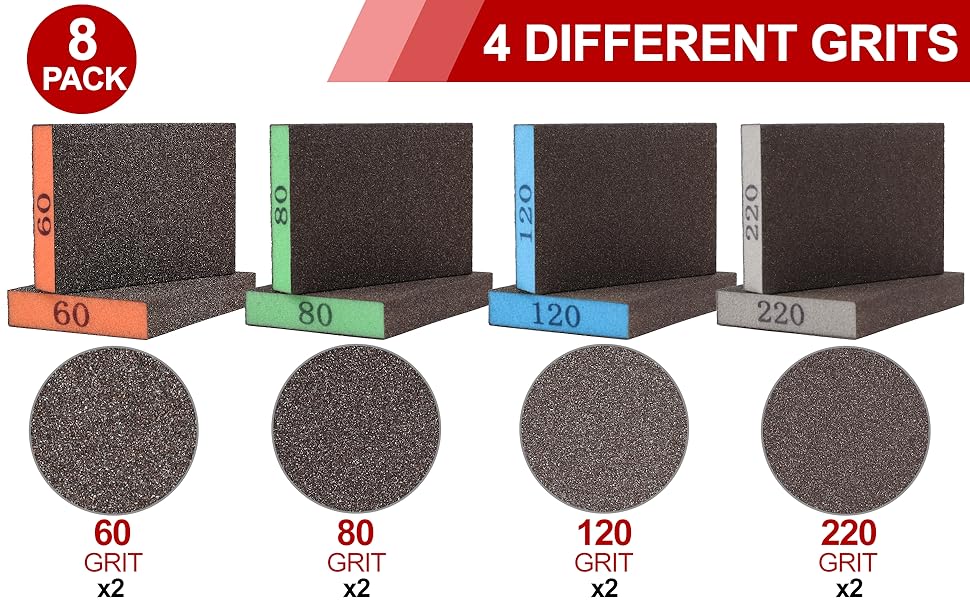
The set includes four grit levels: 60, 80, 120, and 220. Each grit is supplied in two blocks, giving you a total of eight sanding sponges.
| Grit | Typical Use |
|---|---|
| 60 grit | Coarse material removal and rough surface preparation |
| 80 grit | General smoothing and moderate surface correction |
| 120 grit | Fine sanding before finishing or painting |
| 220 grit | Superfine smoothing and final surface preparation |
Lower grit numbers generally provide a coarser abrasive action, while higher grit numbers create a smoother finish. Using the grits progressively can help remove imperfections efficiently before moving to a more refined surface finish.

Durable Abrasive Materials
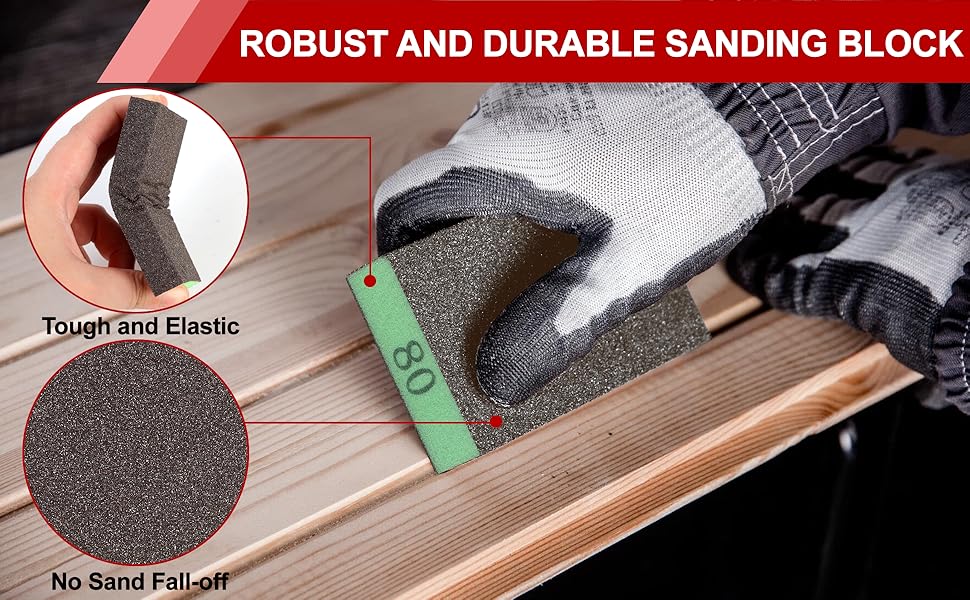
The abrasive surface is made with industrial-grade brown corundum and a special electrostatic sand planting process. This construction is designed to help the abrasive grains remain securely attached during normal hand-sanding work.
The combination of abrasive material and flexible sponge backing gives the blocks a useful balance between surface contact and comfort. The sponge can provide a more controlled grip than a loose sheet of sandpaper, particularly when working on small or detailed areas.
As with any abrasive product, performance and service life depend on the material being sanded, the amount of pressure applied, and the condition of the surface.
Suitable for Wet and Dry Sanding
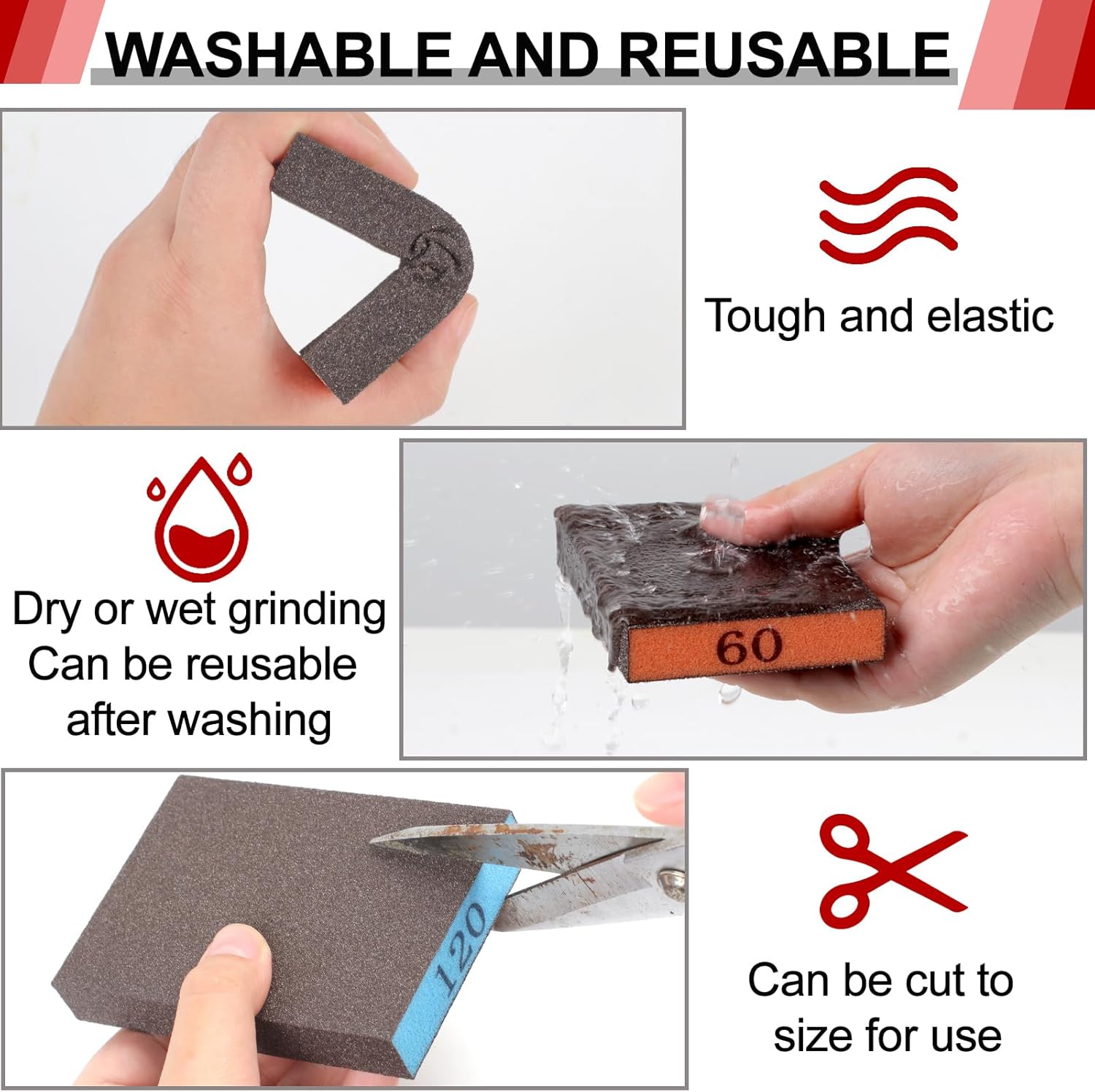
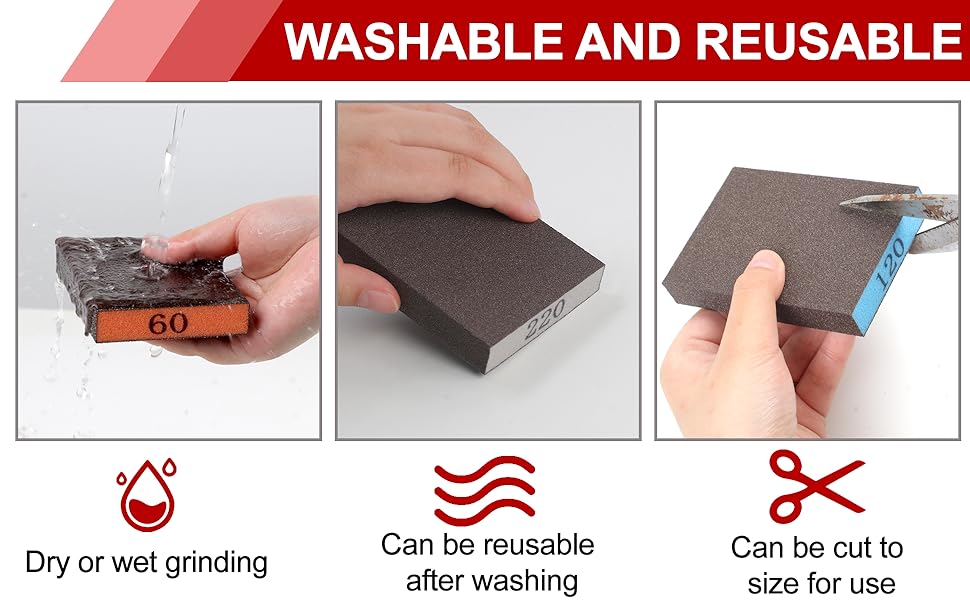
These Sanding Sponge Blocks are designed for both dry and wet sanding. Dry sanding is convenient for general material removal and surface preparation, while wet sanding can help reduce airborne dust during suitable projects.
For wet use, lightly moisten the sanding sponge and apply it to a compatible surface. Wet sanding may be useful when polishing or refining certain finishes, but you should always confirm that the workpiece and coating are suitable for moisture.
After use, rinse the sponge carefully and allow it to dry completely before storage. Proper cleaning helps remove loose particles and prepares the block for future projects.
Easy Grit Identification
Choosing the correct grit is simple because the grit numbers are printed directly on the sanding sponges. The color coding provides an additional visual reference when several blocks are being used during the same project.
- Orange: 60 grit for coarse sanding.
- Green: 80 grit for medium sanding.
- Blue: 120 grit for fine sanding.
- Gray: 220 grit for superfine finishing.
This clear identification system reduces guesswork and helps you move through the sanding process in the correct order.
Multi-Purpose Applications
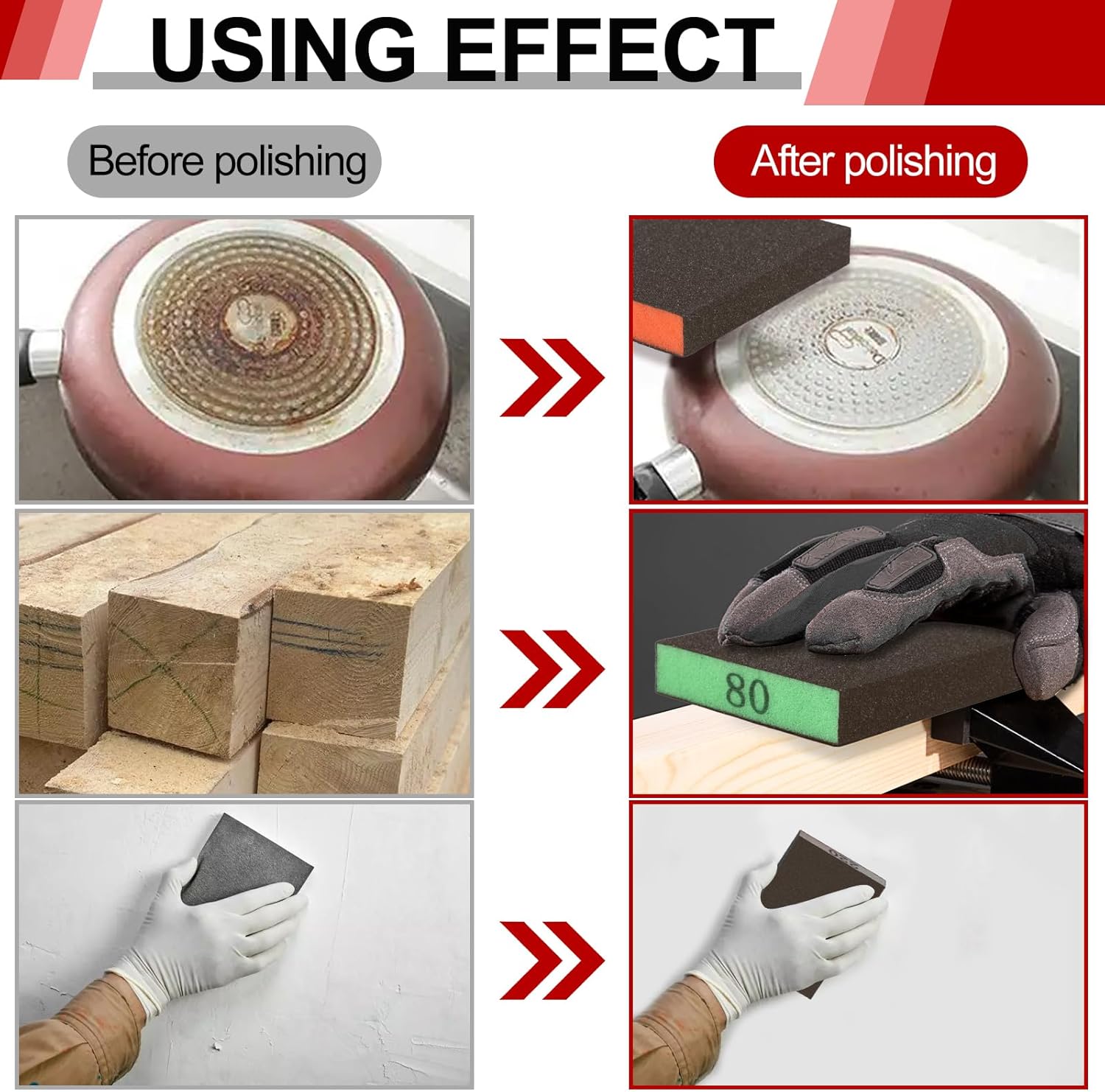
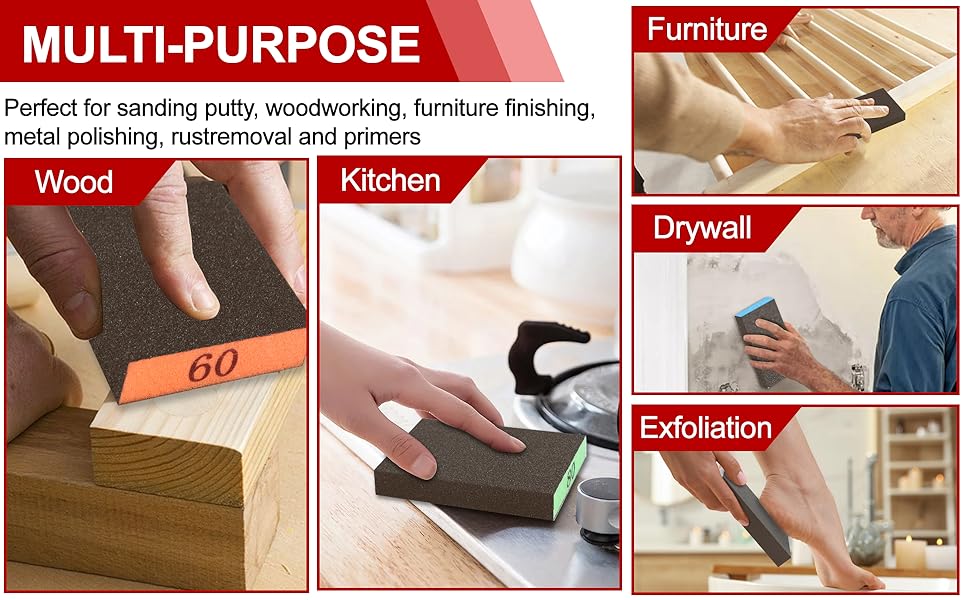
The versatility of this set makes it suitable for many home improvement and workshop applications. The flexible blocks can be used on flat, curved, and irregular surfaces depending on the project.
- Drywall: Smooth joint compound, filler, and repair areas before painting.
- Woodworking: Prepare timber, soften edges, and refine furniture surfaces.
- Furniture finishing: Smooth painted, stained, or coated surfaces between finishing stages.
- Putty sanding: Level filled areas and prepare them for a clean final finish.
- Metal polishing: Refine suitable metal surfaces and remove minor surface imperfections.
- Home renovation: Handle general preparation work during decorating and repair projects.
For delicate finishes, start with a finer grit and apply light pressure. For rough surfaces or heavier material removal, begin with a coarser grit and progress gradually.
How to Use Sanding Sponge Blocks Effectively
- Clean the work surface and remove loose dust or debris.
- Select the grit based on the amount of material you need to remove.
- Use the block with light, even pressure.
- Move in a consistent direction when working on visible surfaces.
- Remove dust and inspect the finish before changing to a finer grit.
- Progress through the grit levels until the desired smoothness is achieved.
- Wash the block after wet sanding and allow it to dry before storage.
When sanding drywall, wood, paint, or other materials, wear appropriate eye protection and a dust mask. Avoid applying excessive pressure, as this can wear the abrasive surface more quickly and may create unwanted marks.
Helpful Sanding Tips
- Test the sanding block on a small hidden area before treating the entire surface.
- Use coarse grits only when the surface requires stronger material removal.
- Switch to finer grits gradually rather than skipping several stages.
- Keep wet and dry sanding blocks clean to avoid transferring particles between surfaces.
- Do not use the same block for incompatible materials if cross-contamination could affect the finish.
Final Thoughts on the Sanding Sponge Blocks
These Sanding Sponge Blocks offer a convenient and flexible option for hand-sanding tasks around the home, workshop, and renovation area. The eight-piece set includes four practical grit levels, with two blocks per grit, allowing you to handle rough preparation, surface smoothing, and final finishing with one organized kit.
The washable wet-and-dry design, color-coded grit identification, durable brown corundum abrasive, and flexible sponge shape make the blocks suitable for drywall, woodworking, furniture finishing, putty, metal polishing, and other compatible surfaces.
For the best results, select the appropriate grit, apply controlled pressure, progress gradually through the grades, and clean the blocks after use. This approach can help you achieve a smoother and more consistent finish across a wide range of DIY projects.
As an Amazon Associate I earn from qualifying purchases.